
LET’S TALK ABOUT BREATH, BABY
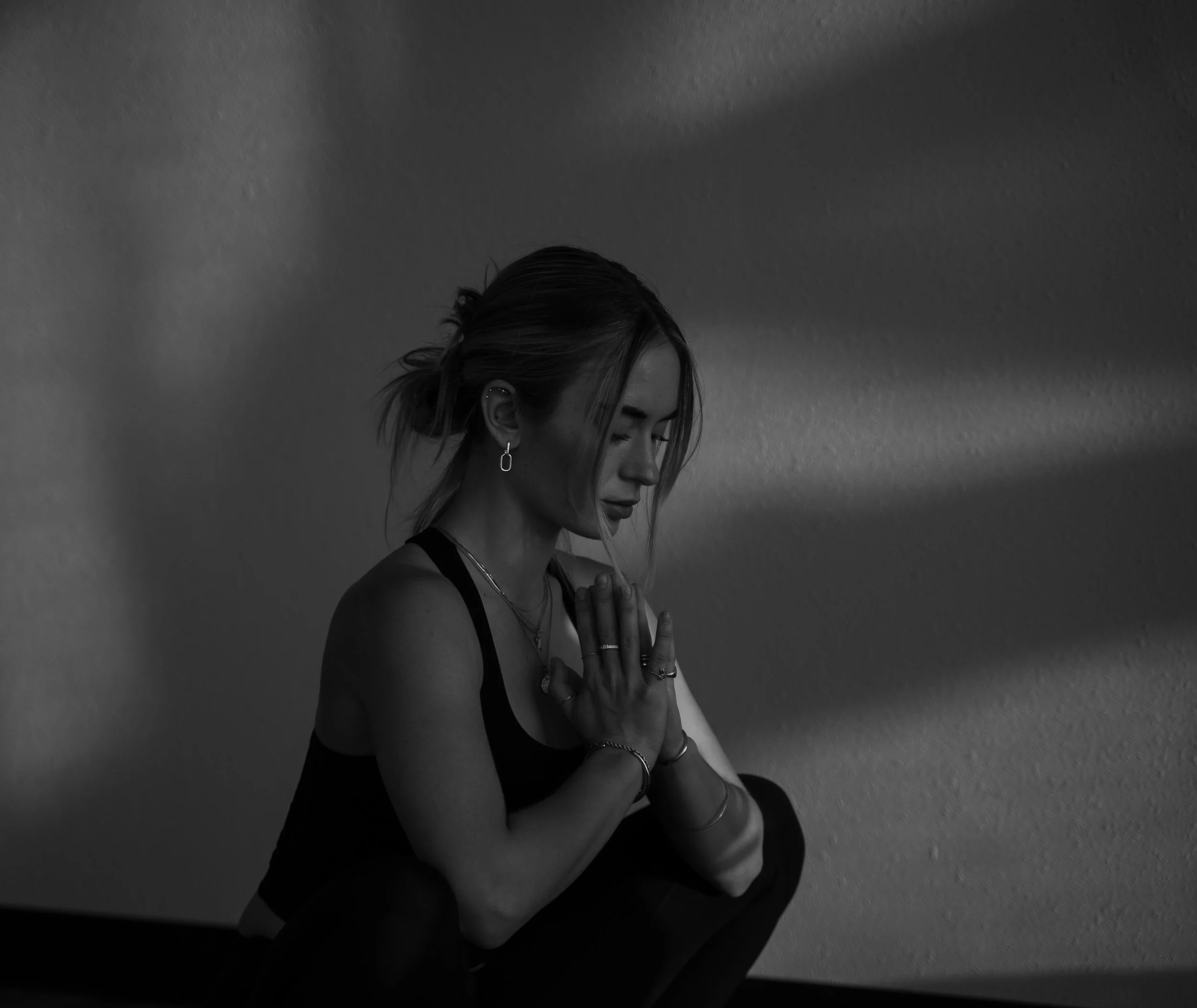
If you take enough classes, you're going to get a lot of instruction on something you've already been doing relatively successfully since the moment you were born: breathing.
Lay on a Reformer and you'll be asked to breathe into your back ribs. Lay on a yoga mat and you might be told to let your belly expand. Another teacher might ask you to breathe through your nose while making a sound like the ocean in the back of your throat. And then one day you try a rapid breathing practice with an intensity that feels somewhat at odds with the word "yoga."
So... what are we actually doing here?
First: The Pilates Breath
In Pilates, we often use something called posterior-lateral breathing, or lateral rib-cage breathing. Try this right now: put your hands around the sides of your lower ribs, thumbs facing forward, and take a big inhale. Instead of pushing your belly forward, imagine your rib cage expanding sideways and backward into your hands.
We breathe this way because of what the rest of the body is doing during Pilates. We're asking the abdominal muscles to stay gently engaged while we move, so instead of fully releasing the abdominal wall with every inhale, we encourage the breath to expand into the sides and back of the rib cage.
Then comes the exhale. If you've taken Pilates, you've probably heard us say "scoop your belly" or "sink your bellybutton toward your spine." These are visualization cues - as you exhale, think about gently drawing the abdominals inward, deepening that connection through your center. The goal is a full exhale, coordinated with abdominal engagement.
This is also why you'll often hear us cue an exhale during the hardest part of an exercise. The abdominals contribute to a forceful exhale, so breathing out pairs naturally with the rest of the work we're asking you to do, which is convenient when someone's asking you to curl your head and shoulders up while simultaneously extending both legs into the yonder.
Then You Walk Into Yoga...
...and the instructions might be completely different.
Because there isn't really one "yoga breath." Yoga has an entire tradition of breath regulation practices called pranayama, and different techniques are used for different purposes. There are humming breaths, cooling breaths, breath holds, different inhale-to-exhale ratios - basically, yogis have been experimenting with breath for a very long time.
You may encounter diaphragmatic breathing, sometimes incorporated into a three-part yogic breath. Here you're encouraged to soften your abdomen and let the inhale expand through your belly and rib cage. Instead of the same abdominal organization we want in Pilates, you're giving your diaphragm room to descend and letting the breath move freely. Slow breathing practices like this promote relaxation and focus.
Then there's Ujjayi, or Ocean Breath. You breathe through your nose while gently narrowing the back of your throat, creating that soft, ocean-like sound. The slight resistance makes the breath audible and deliberate, and the sound gives your attention something steady to return to.
How about Kapalabhati, or Skull-Shining Breath? (Great name, btw.) You create short, forceful exhales by contracting the abdominal muscles, with the inhales happening more passively in between. It's a fast, stimulating practice used to create a sense of energy & alertness.
And then there's Nadi Shodhana, or alternate-nostril breathing, where you use your fingers to alternate breathing through one nostril and then the other. Slower and quieter, traditionally used to focus and settle the mind & lower the heart rate.
Just Breathe
Here's the cool part. Breathing has dual control, meaning it's both automatic and voluntary. You don't have to remember to breathe. Your nervous system has been handling that for you all day while you answer emails/ride the bus/ teach a class/make dinner/scroll Instagram.
But at any moment, you can choose to bring that automatic process into conscious awareness.
That little doorway between automatic and conscious is part of what makes breath such an easy anchor for mindfulness. You don't have to manufacture anything or go looking for something to pay attention to.
Feel yourself inhale. Feel yourself exhale.
Your breath can only happen right now. You can think about the text you forgot to send yesterday, or what you need from the supermarket tomorrow, but you can't breathe yesterday's breath or tomorrow's breath. The one you're noticing is happening in this exact moment.
And for the few seconds you're paying attention to it, so are you.
So this week, pay attention to your breath. Notice where you feel it. Notice whether it changes when something gets difficult. Notice what happens when you direct your attention somewhere specific.
And if on Tuesday your Pilates instructor asks you to breathe into your back ribs, and on Wednesday your yoga teacher tells you to let your belly soften - nobody's contradicting anybody. Different class, same lungs. Different breath for the job.
See ya on the mat!
Mott Haven is turning ONE! 🎂
We're celebrating one year of The Pearl Pilates Haven with Boogie Down Birthday, September 26 at 5pm at Rosa's at Park in MH. DJ, food, your first drink, cake, dancing, and a few mini dance sets from The Pearl crew!
Kids programming is back the first week of October!
Little Yogis and Little Ballet are back on the schedule starting the first week of October. If you've got a little one itching to get on the mat, sign up now :)
Teacher Training starts October 24!
Registration is open for our Fall/Winter Pilates Teacher Training, running October 24 - January 9. Seminars rotate through City Island, Mott Haven, & Riverdale, with observation and practice teaching available at any studio. Early bird pricing ends September 22.
One spot left in Kingston 🍂
Our Leaves, Light + Linger fall retreat is otherwise sold out, but we've got one spot left in a shared room with a female roommate, October 9-12. Pilates, yoga, fall leaves, very good food, and a few days of disappearing from real life. Come with us.